

Exchange EUR to CNY

Our Rates

Our Branches

FAQs

Buying Chinese yuan (CNY) before travelling to China
In China, almost everything is paid for using a mobile phone, via Alipay or WeChat Pay. Foreign tourists can now use these apps with their own bank card, but it is still a good idea to carry some cash in yuan: the app does not always work first time, larger payments made with a foreign card may incur a fee, and by law no business can refuse cash. At Prosegur Change, you can reserve your yuan online, with no commission, and collect it from one of our 18 branches in Spain before you leave.
|
|
|
Currency |
Renminbi yuan (CNY, ¥) |
|
Commission on online reservations |
0 % |
|
Collection |
Free from 18 branches in Spain |
|
Payment |
At the branch, by card or in cash |
|
Leftover pounds |
BuyBack guarantee: €6.95 |
Paying by mobile in China: how it works for tourists
Alipay and WeChat Pay now allow you to link a foreign Visa or Mastercard, so you can pay like a local by scanning a QR code. It is a good idea to install and set them up before travelling, as verification may take some time. You should also be aware of the fees: payments of up to 200 yuan are commission-free, but above that amount, the apps themselves charge a 3% fee on the total transaction amount.


What is cash useful for?
Although mobile payments dominate, cash remains legal tender and the Chinese central bank reminds businesses, public authorities and services that they cannot refuse cash payments in yuan or impose conditions on accepting them. In practice, cash can be a useful backup if the app does not work, if you do not have an internet connection or for larger payments, where it allows you to avoid the 3% fee. Carry banknotes of different denominations: CNY 100 notes are the most common, but smaller denominations will come in handy for taxis and street stalls.
Hong Kong and Macau have their own currencies
If your trip includes Hong Kong or Macau, bear in mind that yuan is not the local currency there. Hong Kong uses Hong Kong dollars, while Macau uses Macanese patacas. Although some businesses may accept yuan, the exchange rate they offer is not usually favourable.

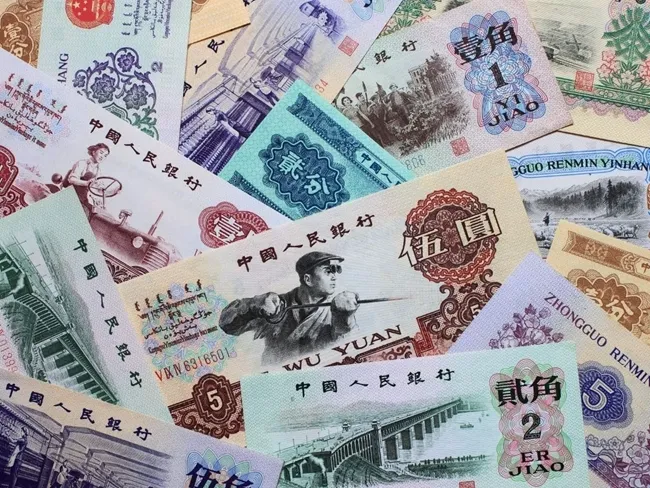
Coins and banknotes in circulation in China
The Chinese yuan (CNY), or renminbi (RMB), is available in both coins and banknotes. Coins in circulation include 1 fen, 2 fen, 5 fen, 1 jiao, 5 jiao and 1 yuan, although the smallest fen denominations are rarely used in everyday life. Banknotes are available in denominations including 1, 5, 10, 20, 50 and 100 yuan, as well as 1 and 5 jiao. The 100-yuan banknote is the highest denomination and one of the most commonly used. When travelling, it is therefore useful to have some 10, 20 and 50 yuan notes alongside 100-yuan notes, particularly for small purchases and cash payments.
Before leaving Spain
Until 31 December 2026, Spanish nationals can enter China without a visa for stays of up to 30 days for tourism, business, family visits, exchanges or transit. If you plan to stay longer, you need to apply for a visa before travelling.
As for cash, in China you must declare more than CNY 20,000, or more than US$5,000 (or the equivalent) in foreign currency, to customs. When leaving Spain with €10,000 or more, you must also submit the S1 form.

Traveling soon?
Here's how to easily exchange your money:

1. Select currency
Choose your currency and the amount you need. Stock guaranteed on 65 currencies!

2. Select location & date
Choose from 18 branches for a free pick up. No need to prepay your order online

3. Collect & pay
Pay by card or in cash directly at the branch upon pick-up. You're now all set for your trip!
Frequently asked questions about the Chinese yuan
It is recommended as a backup. Almost everything is paid for using a mobile phone, but businesses cannot refuse cash and it allows you to avoid the 3% fee on larger payments.
Yes, you can link a Visa or Mastercard. Payments above 200 yuan are subject to a 3% fee.
No, for stays of up to 30 days, at least until 31 December 2026.
Up to CNY 20,000, or the equivalent of US$5,000 in foreign currency.